01 / The finish
White vinyl sleeve
The 5″ × 5″ vinyl sleeve stands 6′ above ground, with posts spaced up to 8′ on center. The 7″-wide rails insert into the posts, and the tongue-and-groove interlocking pickets provide a secure, tight fit.
 (765) 434-6170Book Appointment
VINYL FENCING
Make space for a private backyard, a welcoming picket border or a more open boundary. Ideal Fence installs vinyl fencing in Kokomo and North Central Indiana. Compare the look you want with the layout, gates and care your yard needs, then build a plan with our team.
Ideal Fence uses heavy-wall galvanized steel posts driven 4 feet into the ground for wood, vinyl and chain-link fences.
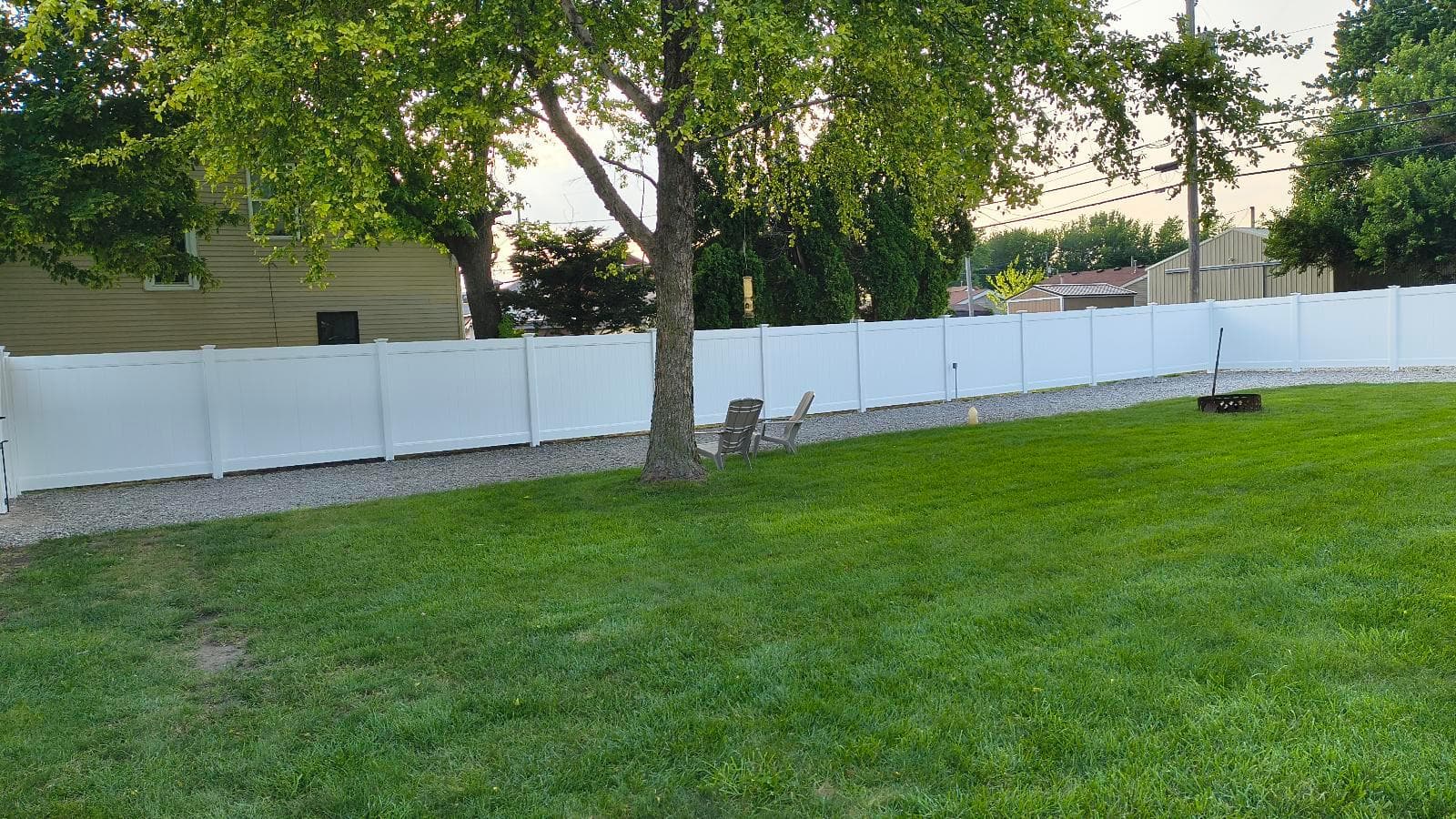
Privacy or picket styles
Occasional cleaning
Clean & consistent
THE FOUNDATION OF AN IDEAL FENCE
An 8′ section on center. A 6′ tall, 5″ × 5″ vinyl post. Inside, an 8′ steel post extends 4′ above ground and 4′ below.
Tap a plus to look inside.
Get a vinyl fence estimate01 / The finish
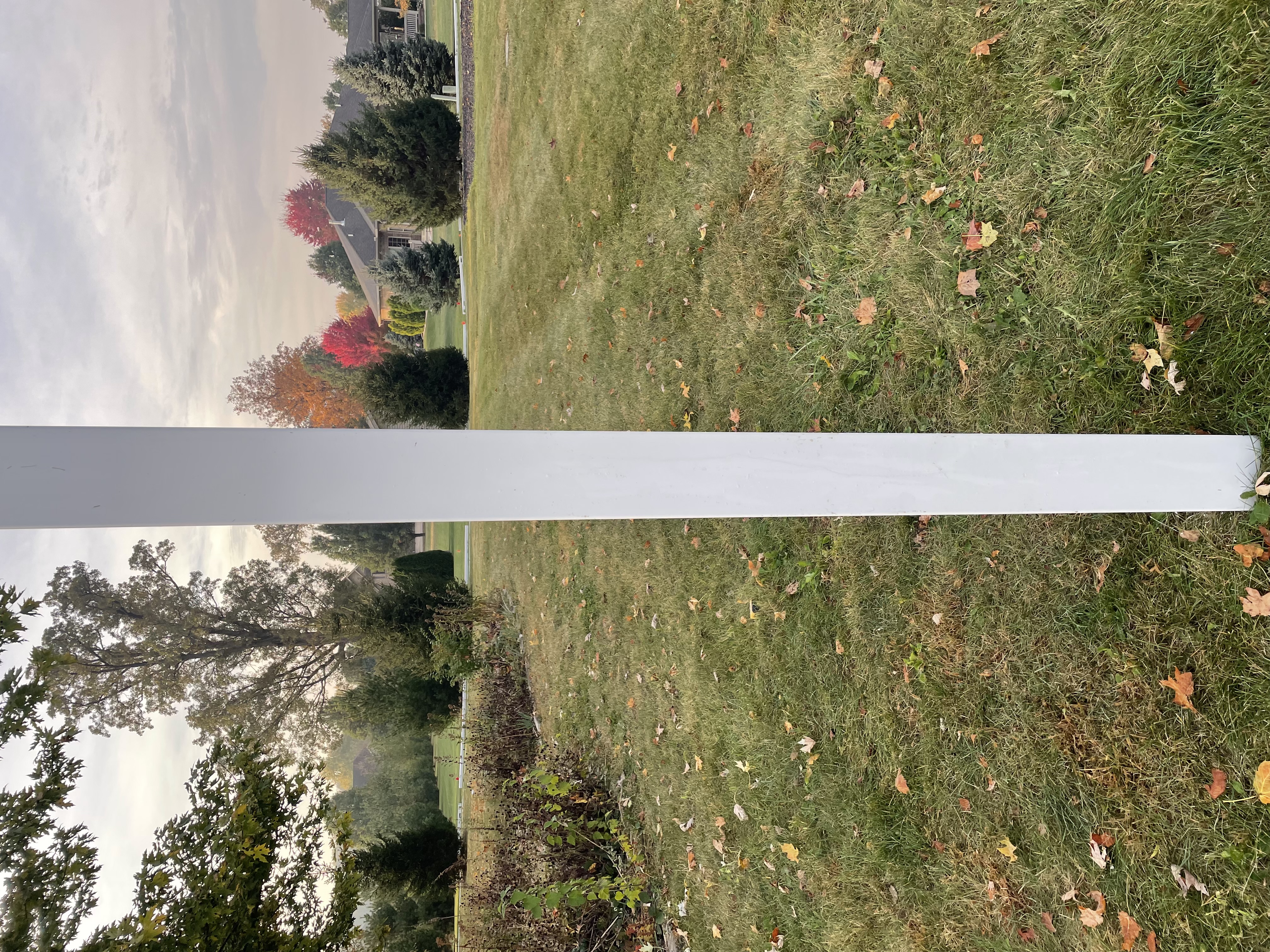
The 5″ × 5″ vinyl sleeve stands 6′ above ground, with posts spaced up to 8′ on center. The 7″-wide rails insert into the posts, and the tongue-and-groove interlocking pickets provide a secure, tight fit.
02 / Inside the sleeve
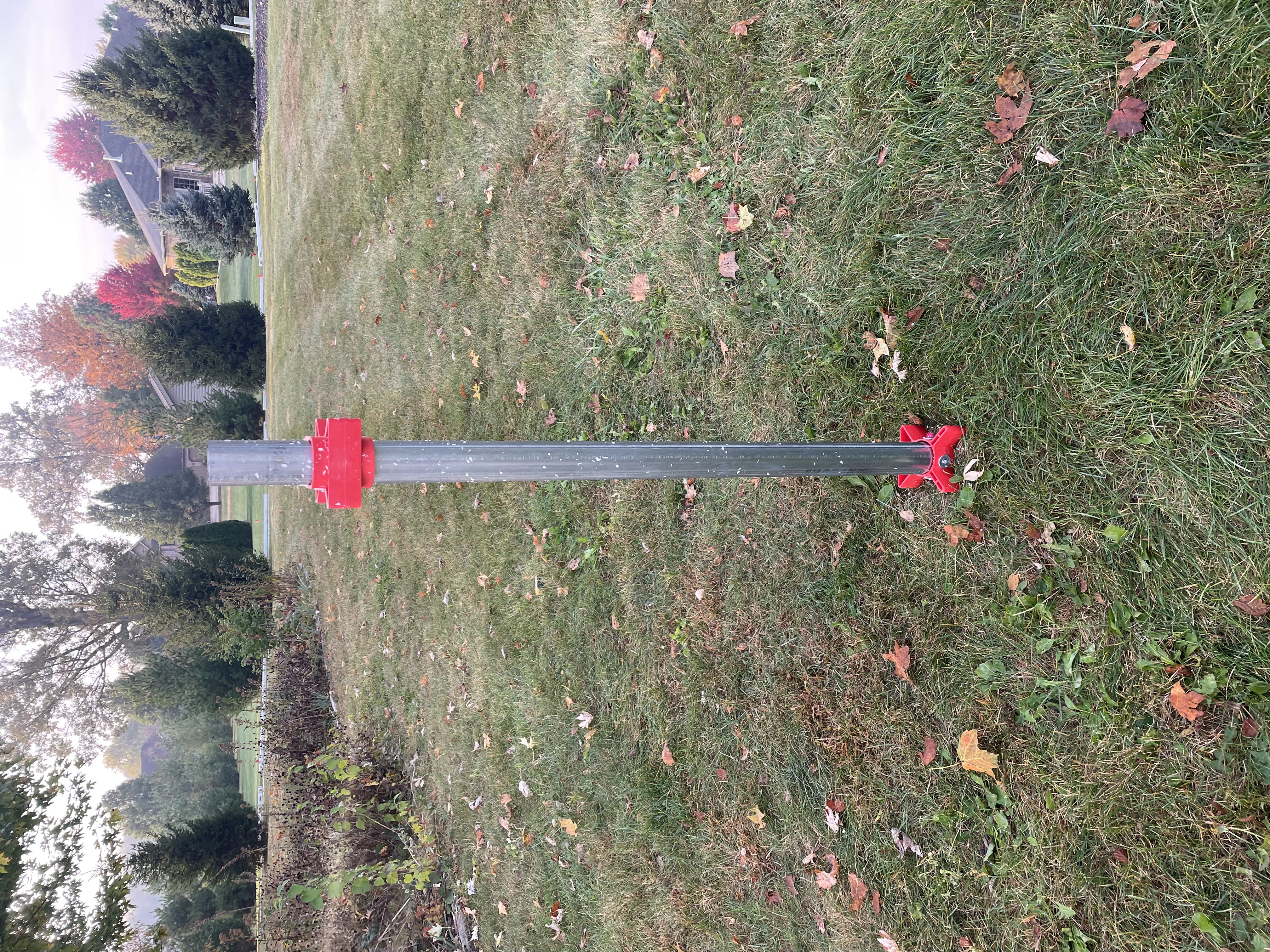
The upper red bracket fits around the steel, below its top at 4′ above ground. It fits snugly inside the 5″ × 5″ sleeve. The vinyl post continues 2′ above the steel.
03 / The structure
Each steel post is 8′ long: 4′ above ground and 4′ below ground. Its top sits 2′ below the top of the 6′ vinyl post offering superior strength for years.
04 / At the base
A second red bracket sits near ground level. Together with the upper bracket, it supports the vinyl sleeve around the steel post and is attached using carbon steel concrete pins.
05 / Below the surface
Heavy-wall, commercial-grade galvanized steel posts that are driven 4′ into the ground, well into the harder, compacted soil.
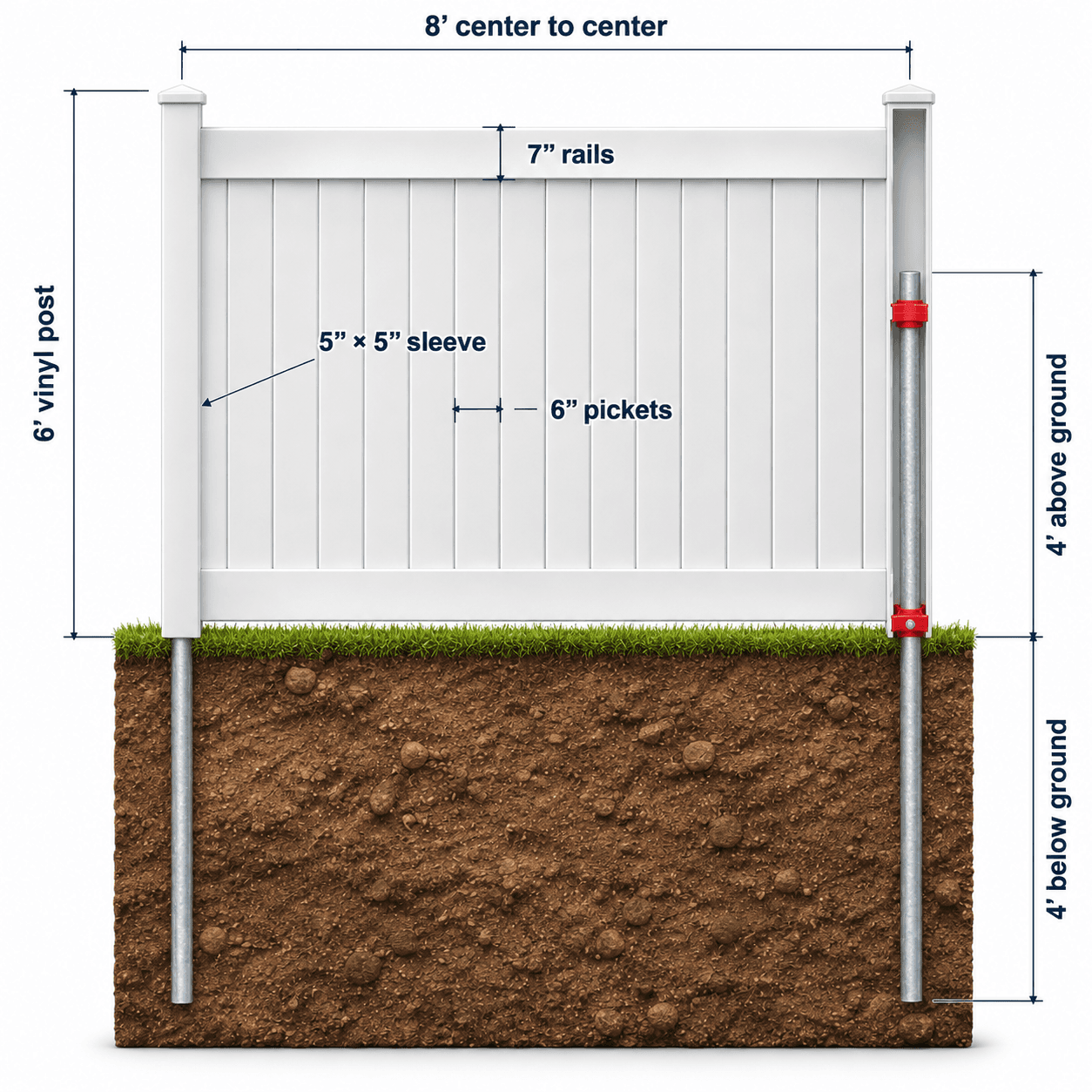
Illustration based on Ideal Fence installation photos. Dimensions show this post system; component details are illustrative.
COMPARE THE LOOK
Vinyl fencing is also called PVC fencing. The panel layout changes how much you see through the fence and how it frames your property. Use these differences to start your conversation about style, height and color.
Compare one section of each style at the same scale. Choose a starting point and we’ll help plan the height, layout and gates for your yard.

Section shown: 8′ wide × 6′ tall
A solid panel creates a private backdrop for a patio, garden or backyard gathering space. Compare the fence height with the views you want to screen, including views from higher ground.
Plan this style: White Vinyl Privacy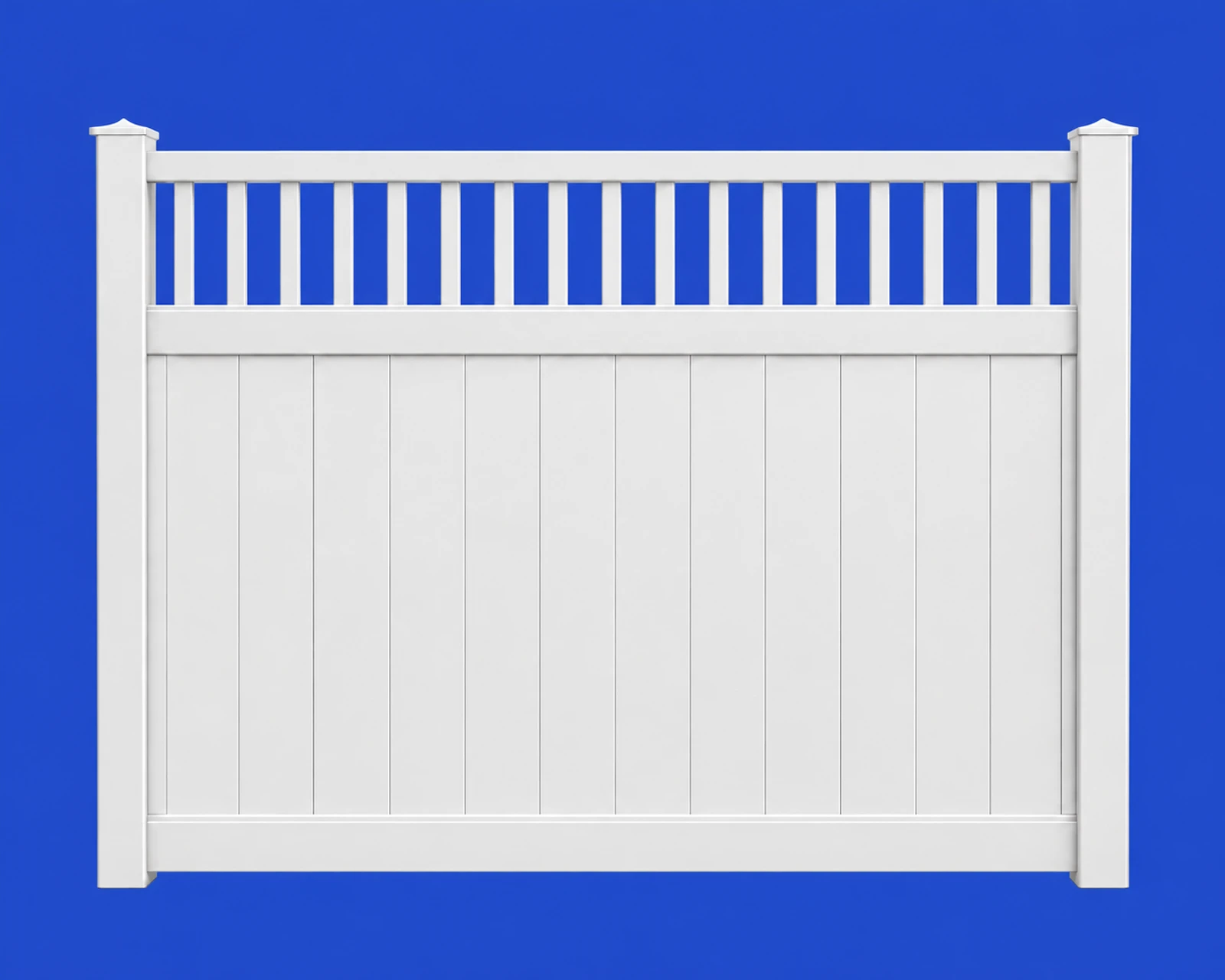
Section shown: 8′ wide × 6′ tall
A solid lower panel pairs with an open row of spindles across the top. This decorative layout adds detail to a privacy fence while allowing a view through the upper section.
Plan this style: White Vinyl Spindle Top
Section shown: 8′ wide × 6′ tall
Spaces between the vertical pickets provide a balance of screening and openness. Compare the actual openings from several angles when deciding how much of the surrounding yard you want to see.
Plan this style: White Vinyl Semi-Privacy
Section shown: 8′ wide × 4′ tall
Spaced pickets sit below a continuous top rail for a clean, level outline. This open style frames a lawn or garden while keeping more of the property in view.
Plan this style: White Vinyl Smooth Top Picket
Section shown: 8′ wide × 4′ tall
Pickets extend above the upper rail in a traditional, level pattern. Consider this welcoming border for a front yard or garden where an open view matters more than privacy.
Plan this style: White Vinyl Classic Picket
Section shown: 8′ wide × 4′ tall
The picket tops dip toward the center of each section, creating a curved outline. The open spacing keeps the yard visible and gives a front boundary a softer appearance.
Plan this style: White Vinyl Scalloped PicketStyle illustrations show the overall look and proportions. Your estimate will confirm the materials, dimensions, spacing and construction for your property. Scalloped heights refer to the taller ends of the section.
Closely fitted panels screen the view through the fence. A white vinyl privacy fence can create a backdrop for a patio, garden or backyard gathering area. Consider the view from both sides and where a gate will interrupt the fence line.
Spaced pickets keep more of the yard in view. An open-top design adds a decorative section above a more solid lower panel. Compare the actual openings and overall height if the fence also needs to help contain a pet.
Semi-privacy designs leave openings between boards or pickets; rail layouts create a much more open boundary. They offer a different look from solid panels. Check the configuration against your needs for screening, children, pets and access before choosing a style.
Discuss current styles, heights, colors and product availability with Ideal before finalizing your selection.
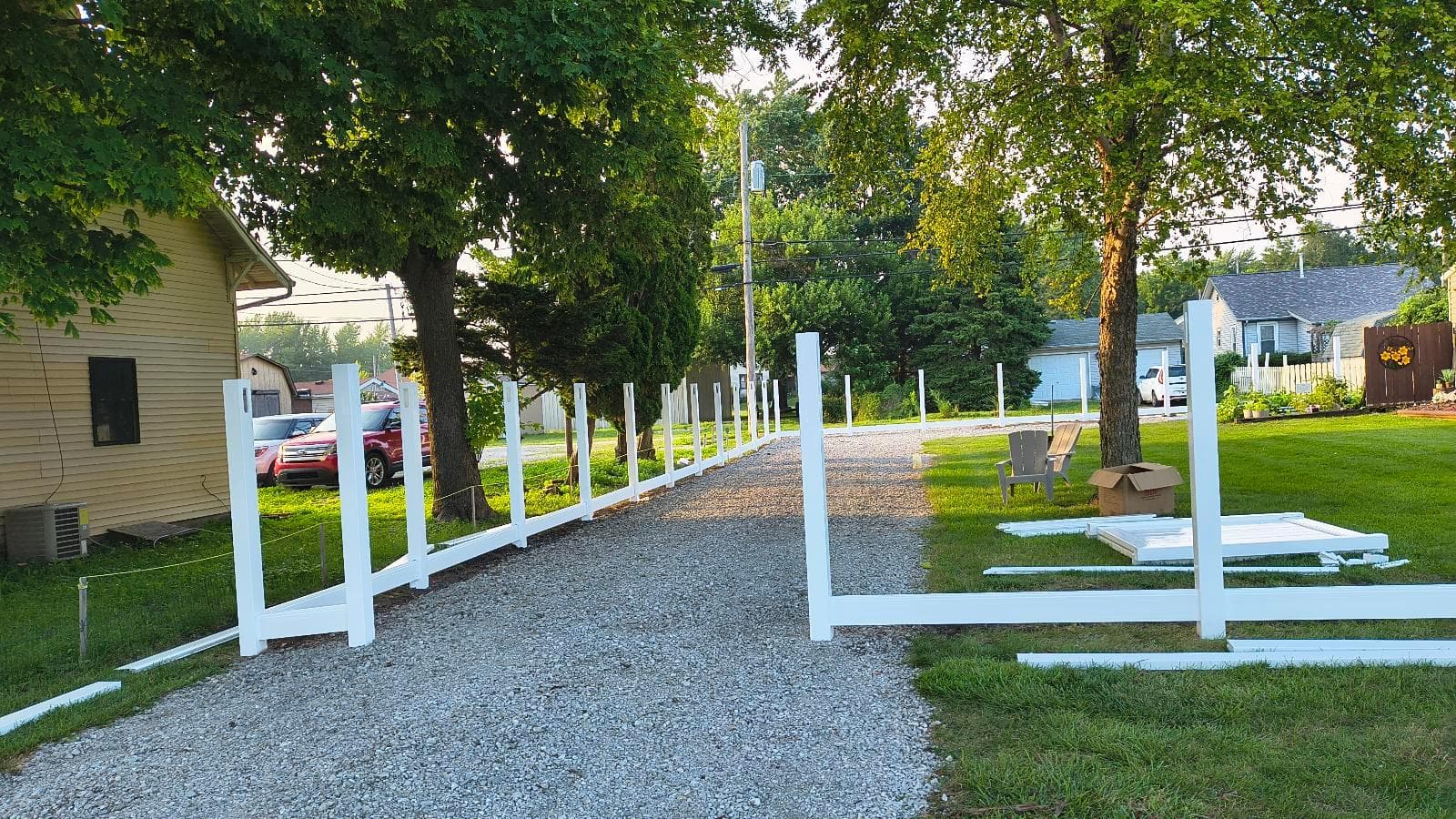
A vinyl fence system includes more than the visible panel. Ask how the rails connect, what supports the post sleeves and which components are specified at corners and gates. Our Kokomo installation shows steel posts concealed by white sleeves, with brackets and bottom rails visible during construction. Review the system proposed for your project so the finished look and underlying support are both clear.
A solid white privacy panel, an open-top design and a classic picket fence create different boundaries. Compare the actual panel height, upper openings and post caps with your goals. Ask which styles and colors are currently available in the selected system. Choosing a photograph first is useful inspiration, but the proposal should identify the product and configuration that will be installed.
Keep the product name and written warranty with your project records. Ask about approved cleaning methods and how to obtain a matching component if damage occurs later. Inspect gate operation along with the panels. Manufacturer material coverage and installation workmanship coverage address different concerns, so compare their terms before assuming that one warranty covers the whole fence in every circumstance.
FROM THE GROUND UP
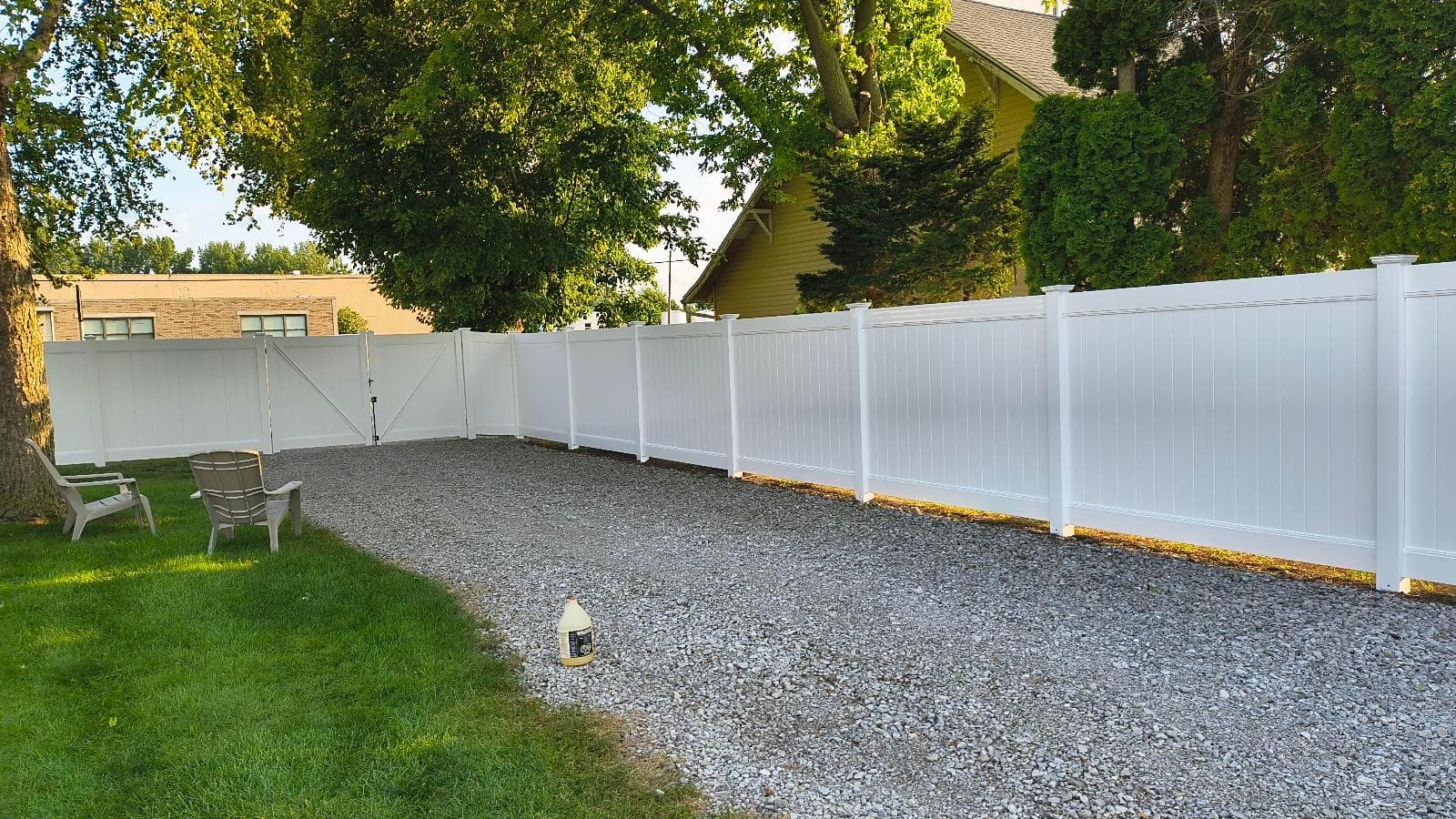
The white exterior is only part of the installation. At the Kokomo project shown below, we used heavy-wall, commercial-grade galvanized steel foundation posts driven directly four feet into the ground. The photographs follow that job from exposed steel and brackets to the finished white privacy fence.
Post brackets are fitted before the white vinyl sleeves cover the steel. Bottom rails then connect the sleeved posts, followed by the privacy panels and finishing details. Your estimate conversation is the time to review the post system, fence layout and gate supports for your own property.
See the Kokomo installation from start to finish →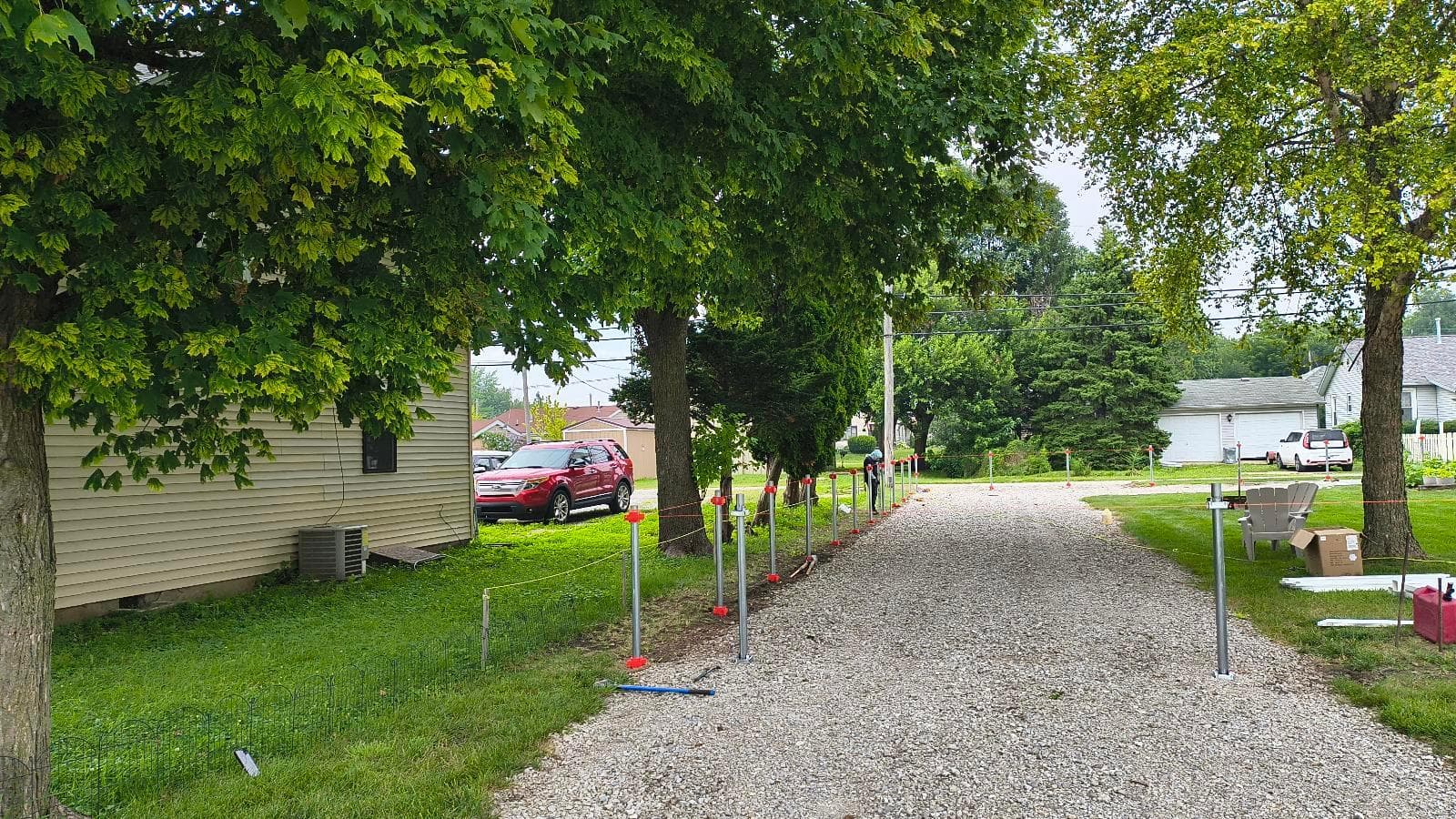
YOUR PROPERTY COMES FIRST
Racked panels follow a slope, while stepped panels stay level in a series of height changes. The product and grade determine what is possible. Review the bottom gaps and transitions before installation, particularly where a small dog could pass underneath.
A daily walk-through opening and access for a mower or equipment may need different widths. Think about the approach, swing direction and clearance on both sides. A matching vinyl gate also needs an appropriate support and hardware plan.
Screening a patio is different from planning a pet enclosure or a pool barrier. Bring those needs into the layout discussion. Height, openings, ground gaps and gate hardware all matter; selecting vinyl alone does not establish that a fence meets pool requirements.
UNDERSTAND YOUR ESTIMATE
A useful vinyl fence estimate describes the complete installed layout. Two yards with the same fence length can have different scopes because of panel choices, gates and site access. These are the details to compare in a written quote.
AFTER INSTALLATION
Vinyl does not have the same staining routine as a wood fence. Surface dirt and buildup can still affect its appearance. Follow the selected manufacturer’s cleaning guidance, and check an unfamiliar cleaner before applying it across the fence.
Look over the panels, caps and gate hardware during routine yard care. If a gate starts dragging or a component is damaged, take photos and contact the team for guidance. Manufacturer material coverage and workmanship coverage are separate; keep the written terms for your installation.
A LITTLE CLARITY
Bring your questions to our Kokomo team. We have been building fences since 2001 and can help you work through the options for your property.
More fence planning questions →PVC is the plastic used in vinyl fencing. The terms often describe the same material, but products differ in their construction and specifications. Compare the complete panel and post system, finish, hardware and written warranty rather than choosing by the material name alone.
A solid privacy design screens the view through its panels. Height, changes in ground level and the view from nearby elevated areas affect the privacy you experience. Point out the places you want screened so the layout can address your actual yard.
The Kokomo installation shown here uses steel foundation posts driven four feet into the ground. That is the method documented for this project. Discuss the specified foundation and gate supports for your chosen fence and site with Ideal.
The fence design needs to account for the amount of slope and the panel’s construction. Racking and stepping produce different top lines and bottom gaps. Bring photos of the slope so the team can review a suitable layout and explain the transitions.
Start with the appearance and privacy you want, then review current product options with the team. The style, height and color should be identified in your quote. Product availability and any neighborhood requirements can affect the final selection.
Vinyl offers a consistent panel appearance and a different care routine from natural wood. Wood has grain, texture and finish choices that change as it weathers. Compare the look, upkeep, layout and complete installed scope of the options you are considering.
Share your address, the part of the yard you want enclosed and any gate, privacy or pet needs. A rough sketch and photos can help. You can start with the instant quote tool or contact Ideal to discuss the project; final scope needs a property review.
FROM OUR WORK
LET’S TALK ABOUT YOUR YARD
Tell us what you have in mind. We will help you work through the options and next step.
 Steel post & brackets ↗
 Vinyl sleeve in place ↗
 Vinyl · Curb appeal
 Vinyl · Curb appeal