4.7 / 580 Google reviews
Ideal Fence — fence contractor in Kokomo, Indiana(765) 434-6170Book Appointment
← All fence options

WOOD FENCING

Wood & Cedar Fence Installation in Kokomo

Natural grain, a private backyard and a fence that suits your home. Ideal Fence helps customers in Kokomo and North Central Indiana plan wood fencing around the look they want, the way they use their yard and the care they are ready to give it.

Ideal Fence uses heavy-wall galvanized steel posts driven 4 feet into the ground for wood, vinyl and chain-link fences.

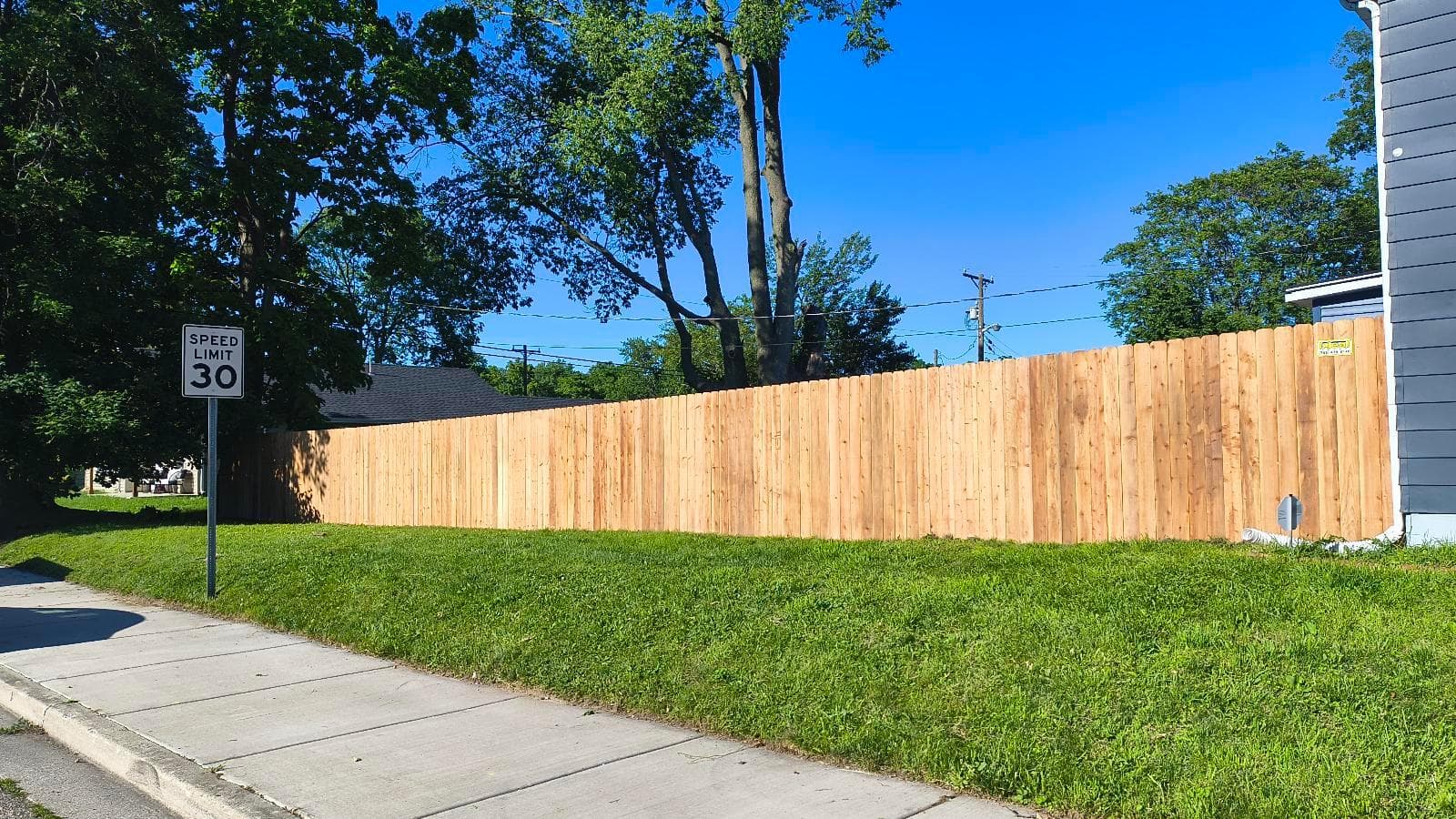
Vertical wood dog-ear privacy fence following a grassy bank beside a sidewalk and a shaded residential yard.
PRIVACY

Full or partial privacy

UPKEEP

Regular care & finish review

CHARACTER

Warm & natural

COMPARE THE LOOK

Compare cedar privacy and picket fence styles.

The arrangement of the boards changes the fence’s appearance and the view through it. Compare these common layouts, then discuss the wood species, dimensions and current style options for your project.

Compare one section of each style at the same scale. Choose a starting point and we’ll help plan the height, layout and gates for your yard.

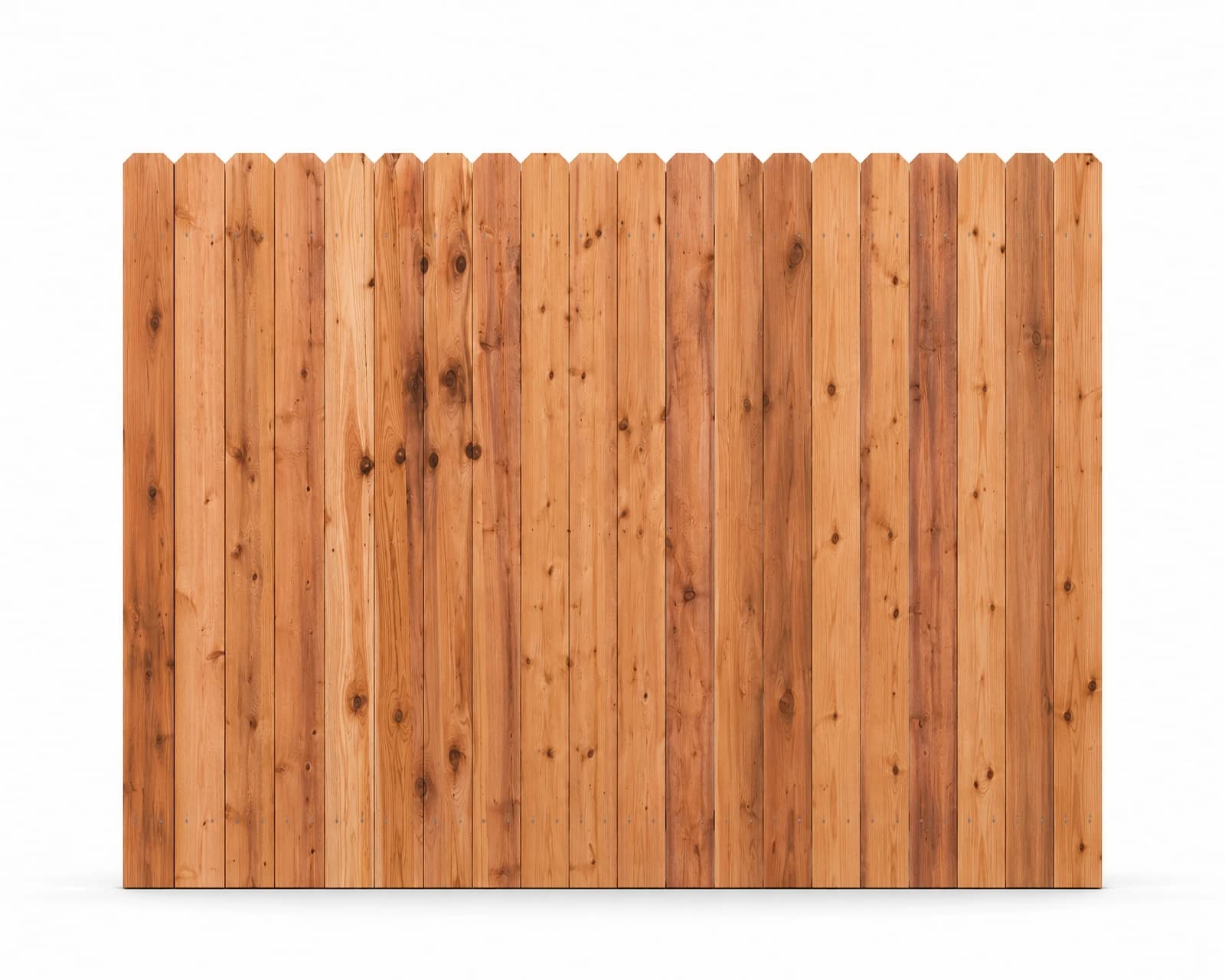
Cedar privacy fence illustration, 8 feet wide and 6 feet tall, with closely fitted vertical dog-ear pickets.

Privacy

Section shown: 8′ wide × 6′ tall

Side-by-side vertical boards form a straightforward wood privacy screen with natural cedar character. Wood moves as it dries and weathers, so small gaps between boards can change over time.

Plan this style: Cedar Privacy
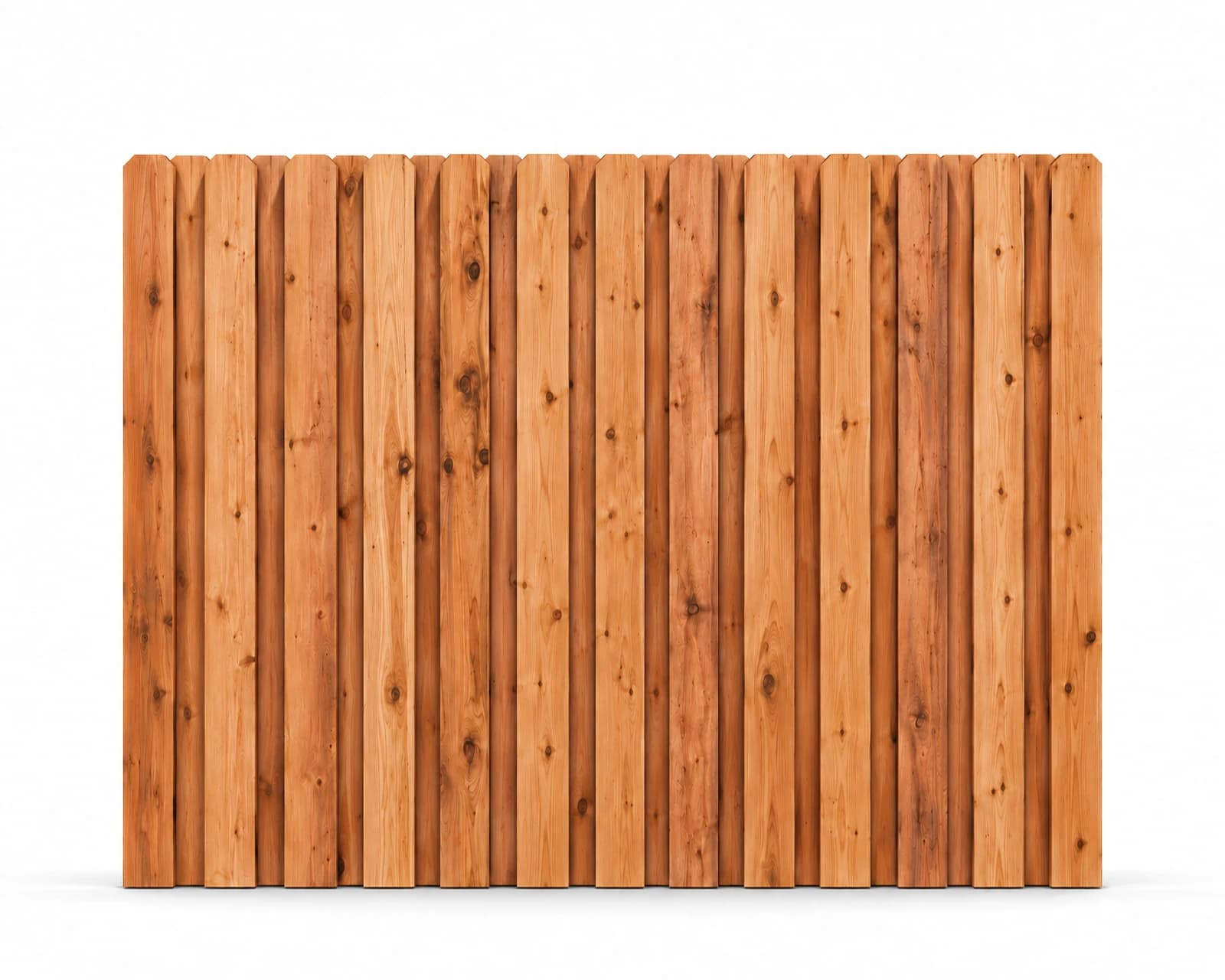
Cedar board-on-board privacy fence illustration, 8 feet wide and 6 feet tall, with overlapping vertical dog-ear pickets.

Board On Board Privacy

Section shown: 8′ wide × 6′ tall

A second layer of vertical boards overlaps the spaces in the first layer. The layered face adds depth and helps screen the gaps between boards; discuss overlap and the view from both sides.

Plan this style: Cedar Board On Board Privacy
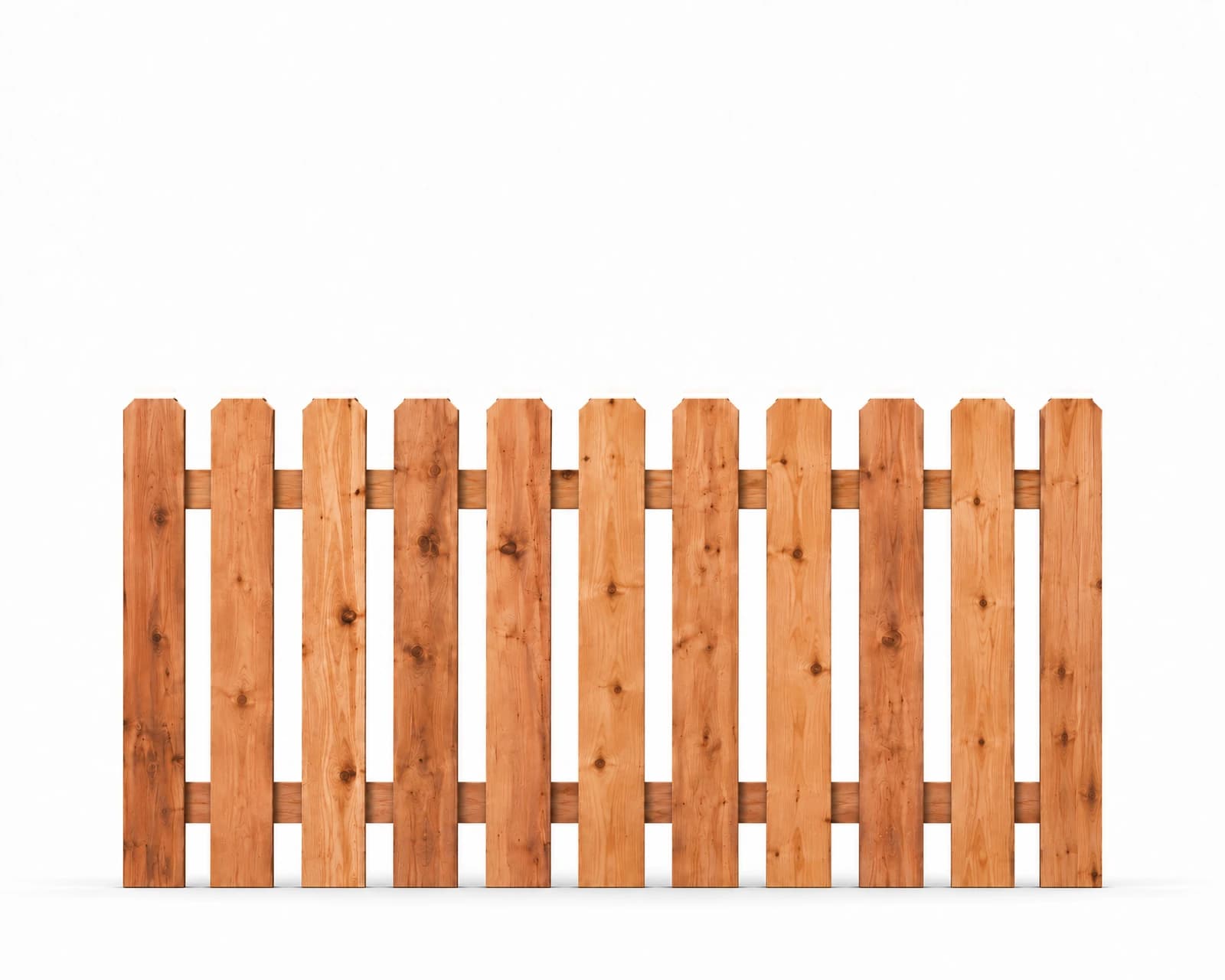
Cedar spaced picket fence illustration, 8 feet wide and 4 feet tall, with a level row of dog-ear pickets and open gaps.

Spaced Picket

Section shown: 8′ wide × 4′ tall

Evenly spaced cedar pickets define a yard or garden without closing off the view. Review picket spacing and gate openings against your needs for pets, children and everyday access.

Plan this style: Cedar Spaced Picket
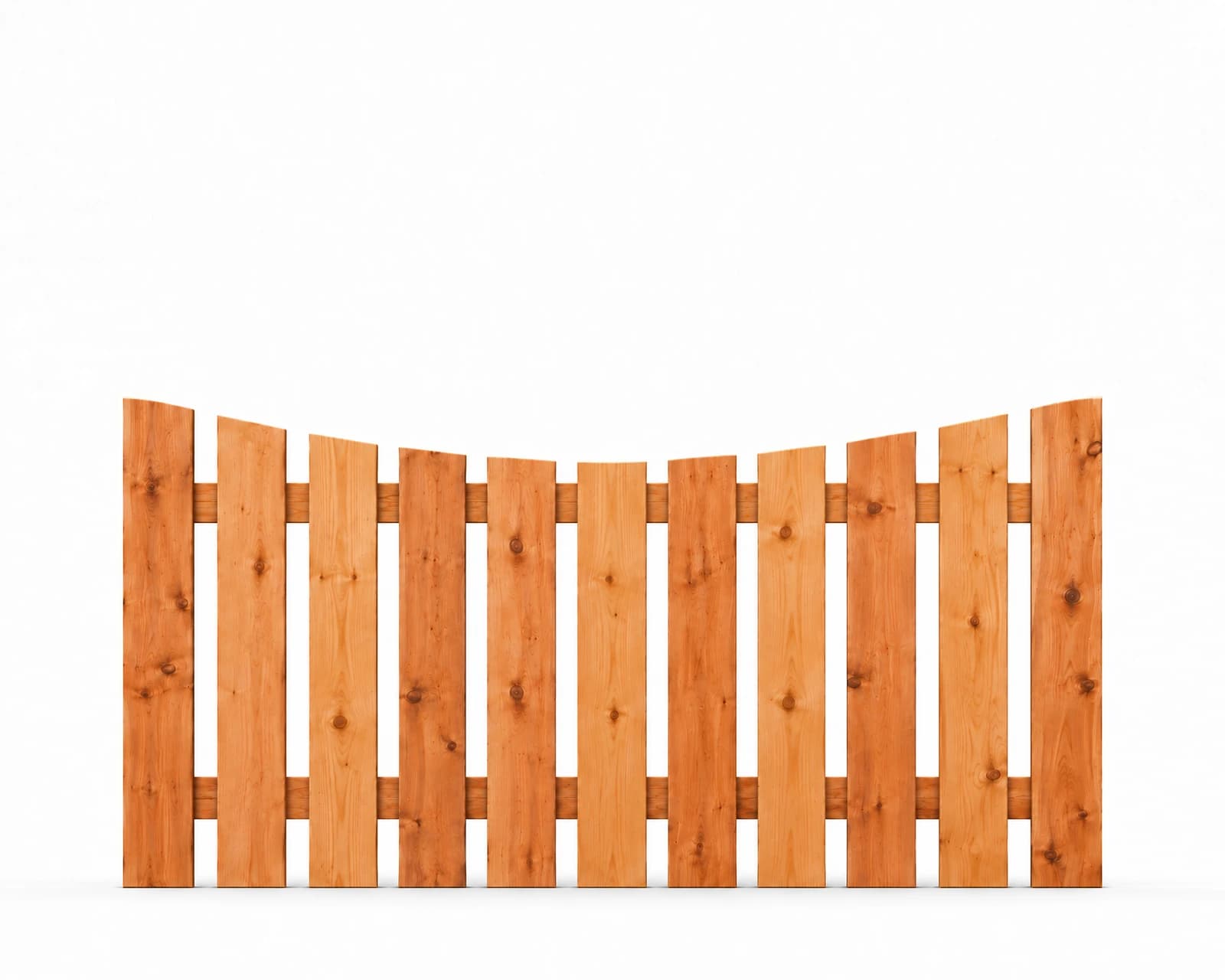
Cedar scalloped picket fence illustration, 8 feet wide and 4 feet tall, with spaced pickets dipping gently toward the center.

Scalloped Picket

Section shown: 8′ wide × 4′ tall

Spaced cedar pickets follow a shallow curve, with taller ends and a lower center. This style adds a gentle decorative line while preserving the open feel of a picket fence.

Plan this style: Cedar Scalloped Picket
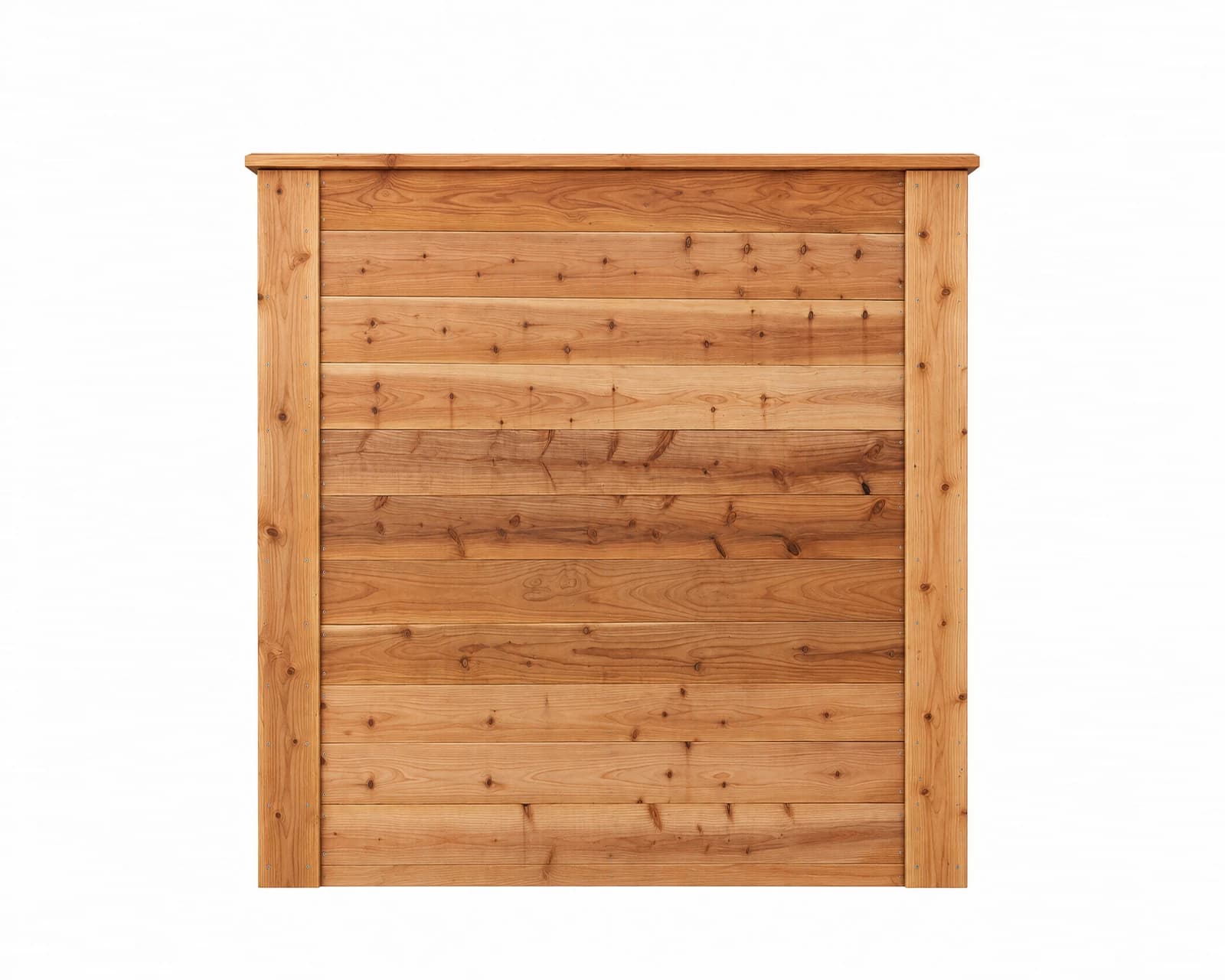
Horizontal cedar privacy fence illustration, 6 feet wide and 6 feet tall, with side-by-side boards and a continuous top cap.

Horizontal

Section shown: 6′ wide × 6′ tall

Cedar boards run across the section for a clean horizontal pattern. Plan support spacing, corners and changes in ground level with the team, and compare how board gaps may change as the wood weathers.

Plan this style: Cedar Horizontal
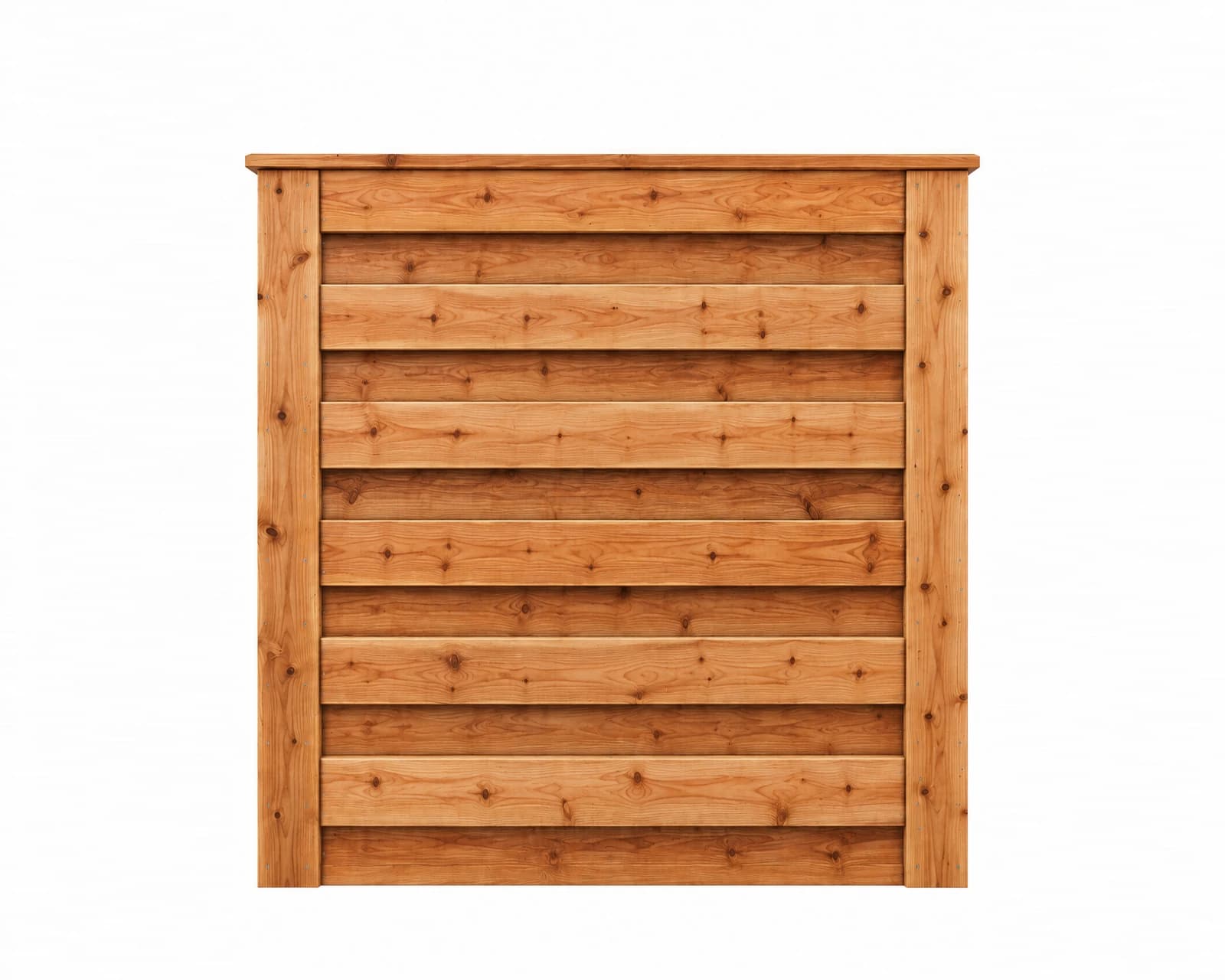
Horizontal cedar board-on-board fence illustration, 6 feet wide and 6 feet tall, showing overlapping boards and a top cap.

Horizontal Board On Board

Section shown: 6′ wide × 6′ tall

Overlapping horizontal boards combine a layered face with the long lines of a horizontal fence. Compare the depth, overlap and material requirements with a side-by-side horizontal layout.

Plan this style: Cedar Horizontal Board On Board

Style illustrations show the overall look and proportions. Your estimate will confirm the materials, dimensions, spacing and construction for your property. Scalloped heights refer to the taller ends of the section.

More about board layouts, openings and privacy

Stockade / side-by-side boards

Vertical boards sit next to each other to form a straightforward privacy screen. Wood can move as it dries and weathers, so the spacing you see may change over time. Ask which side shows the rails and how the fence will look from adjoining properties.

Board-on-board

Overlapping boards create a layered face and help screen the spaces between individual boards. Compare the overlap, construction and appearance from each side. The additional boards also change the material requirements compared with a side-by-side layout.

Shadowbox

Boards alternate on opposite sides of the rails, creating a pattern that looks different as you move along it. The angled view can reveal openings. Review an example from several directions if privacy is your main reason for choosing the fence.

Horizontal boards

Boards run across the fence rather than vertically, giving the yard a different visual rhythm. Board spacing, support spacing and the treatment of corners shape the finished look. Discuss how the design will follow any changes in ground level.

Discuss current styles, heights, colors and product availability with Ideal before finalizing your selection.

Details that shape a wood privacy fence

Boards, rails and the finished sides

Compare the board arrangement, rail placement and side facing each property. Overlapping boards change screening, while a shadowbox layout creates a different view at an angle. Horizontal boards emphasize a different line across the yard. Ask about the proposed wood and component sizes, then review how the design handles corners and gates. A style name alone does not describe all of those construction details.

Wood movement and outdoor exposure

Wood responds to moisture and weather. Appearance can change as boards dry and age, so discuss expected variation and maintenance before choosing the material. Look at shade, vegetation and sprinkler exposure along the proposed line. The installation and care plan should take those conditions into account without promising that every board will retain its original color or shape indefinitely.

Transparent and semi-transparent stain choices

Ideal offers Expert Stain & Seal transparent and semi-transparent colors for wood fence staining. Decide how strongly you want the finish to change the appearance, then compare samples with the actual wood. Preparation and readiness depend on the surface and product instructions. Save your chosen color and finish information so future cleaning and maintenance can follow the same plan.

FROM THE GROUND UP

A wood fence starts with the structure behind the boards.

The posts support the fence, the rails connect the posts, and the boards create the visible face. A good planning conversation covers all three. For a cedar or other wood fence, ask which species and components are included, how the boards are arranged and how gates will be supported.

A steel-post wood fence combines a natural wood face with a separate foundation system. Discuss the post and fastening details available for your layout. Our Why Ideal page shows the steel foundation method at a Kokomo vinyl project; use it to start a conversation about the construction specified for your wood fence.

See how we explain our fence foundations →

YOUR PROPERTY COMES FIRST

Privacy, grade changes and gate access.

Choose the view you want

A wood privacy fence can screen a patio or define a backyard gathering area. Compare the view through board gaps and above the fence from the places you use most. Shadowbox and spaced designs provide a different degree of screening from overlapping boards.

Work with uneven ground

A fence can follow a grade or change height in steps, depending on its design. Discuss the top line, board lengths and space below the fence. Retaining walls, corners and transitions deserve attention before the layout is finalized.

Plan for pets and everyday use

Share your pet’s size and behavior, including digging or jumping. Ground gaps, board spacing, height and gate latches all need review. Leave usable access for lawn equipment and think about the clearance needed to swing a gate on sloped ground.

UNDERSTAND YOUR ESTIMATE

What affects wood fence installation cost?

Compare wood fence quotes by the actual construction and scope. A price for a basic board layout does not describe the same project as an overlapping design with wider gates and a finish application. Ask for these choices to be written down.

Species and board layout
Wood selection, board dimensions, overlap and spacing determine the material quantities and appearance.
Height and fence line
Length, height, corners and grade transitions affect both the structure and the work required.
Gates and site access
Opening widths, supports, hardware and the space available for installation shape the scope.
Preparation and finishing
Confirm any existing-fence removal, disposal, cleaning or later staining separately so inclusions are clear.

AFTER INSTALLATION

Plan for the way natural wood changes.

Wood weathers. Its color, surface and dimensions can change with exposure and moisture. Inspect boards, fasteners and gate operation as part of your regular yard care. Keep landscaping and stored items from making it difficult to inspect or reach the fence.

Staining and sealing can be part of the care plan for a new or existing wood fence. The wood condition, prior coating, preparation and selected product affect timing and appearance. Ideal offers fence cleaning and staining services; discuss a finish sample and maintenance guidance for your specific fence.

A LITTLE CLARITY

Questions about wood fencing.

Bring your questions to our Kokomo team. We have been building fences since 2001 and can help you work through the options for your property.

More fence planning questions →
What is the difference between a cedar fence and a wood fence?

Cedar is a wood species, while “wood fence” describes a broader category. The species, board dimensions, grade and construction should be identified in the estimate. Ask which materials are available for the style you want instead of assuming every wood component is the same.

Which wood fence style gives the most privacy?

Compare the actual board arrangement and spacing. Overlapping boards screen the spaces between boards; side-by-side boards may develop visible gaps as the wood changes. Shadowbox offers different views from different angles. Height and grade also affect what can be seen from neighboring areas.

Can I discuss steel posts for a wood fence?

Yes. Ask Ideal to explain the post, rail and fastening system for your proposed wood fence. A finished wood face does not tell you everything about its foundation. The correct construction needs to be discussed with your layout, height and gates.

Should I stain my new wood fence right away?

The surface and selected product determine preparation and application timing. Moisture, weather and the condition of the wood need review. Discuss the finish plan with Ideal and follow the product guidance instead of assuming every new fence is ready for stain on the same schedule.

Read about staining and sealing →

Can a horizontal wood fence follow a slope?

The design needs a plan for how the boards and posts meet changes in grade. A stepped top line and a layout that follows the slope will look different. Review the proposed transitions and gaps with the team before deciding on the final arrangement.

Is wood or vinyl better for my backyard?

Consider the appearance and upkeep you prefer. Wood offers natural texture and finish choices; vinyl offers a more consistent surface and a different cleaning routine. Compare the same length, height, gate needs and installation scope to make a useful decision.

Compare wood and vinyl fencing →

What should I have ready for a wood fence estimate?

Share your address, a rough fence line, the privacy you want and the openings you need. Bring examples of board layouts you like and mention any existing fence. Ask for the wood, posts, hardware, finish work and warranty details to be clear in the proposal.

Contact Ideal about a wood fence →

FROM OUR WORK

Wood in real yards.

LET’S TALK ABOUT YOUR YARD

Ready for a fence plan that fits?

Tell us what you have in mind. We will help you work through the options and next step.

Call IdealRequest a Free Quote